
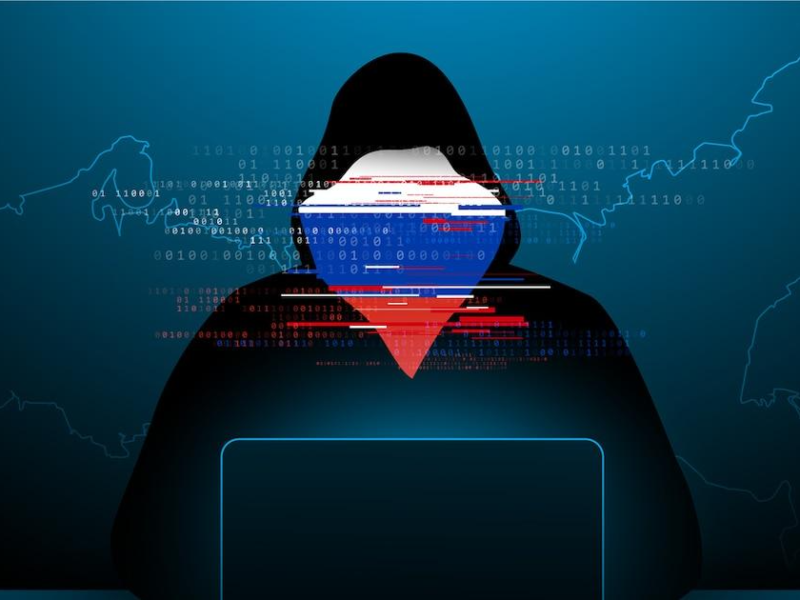
Doppelgänger: The Two Faces of Russian Disinformation
By Elise MINMEISTER
Translated by Alexander COOPER, Lou STEINS, Mercy CAMPBELL, Jonathan WYNNE-BÄRWALD, Hector COOPER and Mila ISSOLAH
This article was originally published in French. You can read it here: Doppelgänger : le double visage de la désinformation russe
The Russian disinformation campaign “Doppelgänger” began in 2022 with the aim of destabilising Western nations through an ideological war waged by the Kremlin. The operation has been widely covered by the media, which has crucially shed light on Russian disinformation companies. However, this extensive media coverage masks the limited impact of the Doppelgänger operation on populations exposed to fake news on social media and the internet.
In German folklore, a Doppelgänger is an evil double, a bad omen for the future. It casts no shadow and has no reflection, almost as though it does not exist at all. Nonetheless, its actions are always wicked, and their consequences dire. Fittingly, the non-governmental organisation (NGO) EU Disinfo Lab chose the name “Doppelgänger” for the colossal disinformation campaign carried out by Russia since 2022 against the European Union and the United States. Such a disinformation campaign is defined as a “specific or continuous action which consists of, by any means, misleading an adversary or fostering subversion in order to weaken them”1, most often by manipulating individuals’ perception of reality through fake news. The NGO has analysed the magnitude of the phenomenon but acknowledges the inherent difficulties in assessing its true impact on the views of targeted individuals and governments.
Operation Doppelgänger appears to be consistent with Russia’s wider international policy, based on direct provocation of the West, of which the annexation of Crimea in 2014 and the invasion of Ukraine in 2022 are two major aspects. This new imperialism is further illustrated by the informational and ideological war conducted by the Kremlin on the internet and social media, using Doppelgänger as a key tool. This article therefore seeks to analyse this phenomenon and its real impact on the West, in comparison with Russian perceptions and expectations of the operation.
A colossal disinformation campaign
Operation Doppelgänger conceals a technological model known as “augmented reality” (Rid, 2024). The term was chosen by the Russian company the Social Design Agency (SDA) to describe their large-scale disinformation tools, which involve the creation of fabricated documents and videos to elicit emotional reactions from individuals. The Russian government has signed a contract with this company, as well as with another called Struktura, to deploy these new disinformation weapons in its international war against the West. The informational destabilisation schemes of both enterprises were detected by Meta in December 2022, a finding later confirmed by VIGINUM2, a technical service that works under the French Prime Minister. According to the timeline reconstructed by the NGO Disinfo Lab, the two main objectives of Doppelgänger are to “undermine support for Ukraine following Russia’s aggression by demonising the Ukrainian government and accusing it of Nazism and corruption”, and also to “sow divisions within countries supporting Ukraine, claiming that supporting Ukraine financially and implementing sanctions on Russia are ultimately failing strategies that only hurt civil society” (EU DisinfoLab, 2024).
The SDA and Struktura have used different tactics to disseminate disinformation, such as creating clones of well-known media and government websites, or designing anti-Ukrainian and pro-Russian sites. The name Doppelgänger refers to this duplication of official websites, which are filled with fabricated or rewritten news, specifically crafted to sow discord amongst citizens and political leaders. These companies mimic the exact design of those websites and share falsified information about the war in Ukraine. The only differences are their lightly modified domain names and a rather rudimentary writing style, which makes it difficult for the untrained eye to detect falsehoods. Several publications have been affected in Europe, like Le Monde, Der Spiegel, and The Guardian. Governmental sites have also been used as models, such as the French Ministry for Europe and Foreign Affairs. Its counterfeit website announced the introduction of a “security tax” collected on every monetary transaction to finance support for the Ukrainian army. The Minister for Europe and Foreign Affairs at the time, Catherine Colonna, had to issue a public statement to refute the claim after VIGINUM exposed the fake. This fabrication had been invented to polarise public opinion on French support for Ukraine.
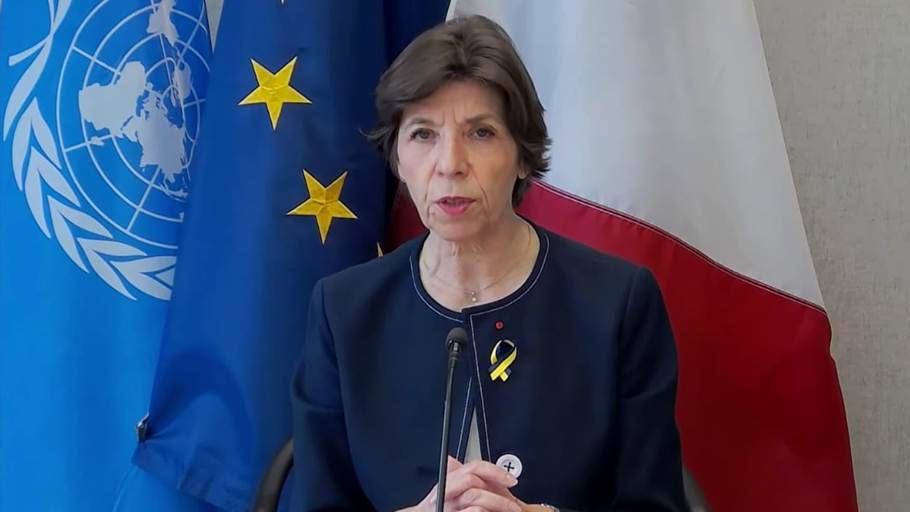
Catherine Colonna, Minister for Europe and Foreign Affairs between 2022 and 2024. Source: BFMTV
EU Disinfo Lab has also analysed the tactics devised by the SDA and Struktura to propagate disinformation online. The companies rely on amplification methods involving comments posted by fake accounts on Meta platforms and X, or the purchase of thousands of advertisements on Facebook pages. However, their operations are not solely digital; they also involve physical interference. In November 2023, French public opinion was shaken by the “Stars of David” hybrid operation, during which stars of David were painted on different buildings, followed by the appearance of red handprints on the Shoah Memorial in Paris. The red hands may have referred to the massacres in Gaza or to the murder of two Israeli soldiers in Ramallah in October 2000. In the context of the Israeli armed intervention in Gaza following October 7th, and with the eruption of antisemitic threats and protests in support of Palestinians, newspapers extensively covered the incident. Images spread rapidly on social media. In the wake of these events, Meta and VIGINUM proved that the disinformation network was made up of thousands of bots linked to Doppelgänger on X.
The structured organisation of Operation Doppelgänger is therefore a powerful tool used by Russia to develop its new “World Majority” doctrine.
Disinformation as a tool for the propagation of the Russian “World Majority” doctrine
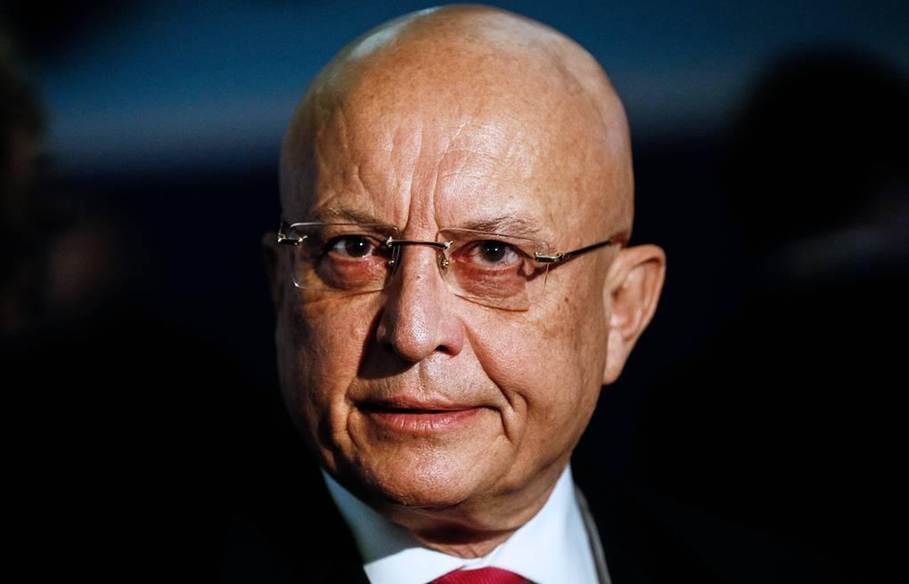
Sergueï Karaganov, ideologue of Russian foreign policy. Source: Le Grand Continent
The Russian disinformation campaign seeks to destabilise the West in the ideological battle between the United States and its allies against the alliance between Russia, China, Iran, and certain countries of the “Global South”3. It is important to note that the use of this term remains contested, with some public figures believing it to be pejorative toward the countries it designates (Beattie, 2023). C. Raja Mohan, in his article “Is There Such a Thing as the Global South?” published in the online review Foreign Policy (2023), denounces the concept: “Tossing more than half of humanity into a single bucket not only has deep analytical flaws. It is also an obstacle to serious engagement with the non-Western world, notwithstanding the seemingly good intentions of the pundits, politicians, and policymakers using the term”. Russia has grasped the stakes surrounding this concept and has developed a countervailing doctrine. The journal Le Grand Continent calls it the Karaganov Doctrine (Laruelle, 2024), after Sergey Karaganov, one of Russia’s leading ideologues. In an article written for the Kremlin, Karaganov described the critical importance for Russia of securing support from non-Western countries following the heavy sanctions imposed after its invasion of Ukraine, and the international arrest warrant issued against Vladimir Putin by the International Criminal Court. Looking to put forth a different approach to that of the West, the Russian government is placing its bets on multilateralism and describes non-Western nations as an integral part of the “World Majority”. Le Grand Continent explains that this concept is more neutral and highlights the demographic minority of the West in comparison with the “Global South”. This doctrine has taken shape in several fields, such as economics through the BRICS+ Summit, the emergence of a new axis of power centred around China, Iran and Russia, as well as through information warfare. The Kremlin thus seeks to undermine the West to convince the “World Majority” that the Old Continent and the United States face domestic turmoil and are weakened by cyber-attacks.
Moreover, the rise of disinformation is a means of destabilising Western countries and sowing doubt among citizens regarding their own government. In doing so, Russia aims to strengthen populist parties, particularly those on the far-right which capitalise on the fear and anger felt by parts of the population toward the ruling elites. These parties are a target for the Kremlin, as their interests often converge. One example is the scandal surrounding the media Voice of Europe, which has been linked to the Doppelgänger campaign. This outlet, created by a Russian investor, was accused and sanctioned by the Czech government after its intelligence services discovered that it functioned as a Russian influence tool aimed at undermining the European elections. The then Belgian Prime Minister, Alexander De Croo, stated that certain members of the European Parliament had been approached by Voice of Europe and paid to promote Kremlin propaganda. The fallout was severe, and many European citizens began to doubt the legitimacy of European institutions as a result. This all came to a head during the European elections, which saw far-right parties gain a large number of seats in the European Parliament. Consequently, Russia was able to back up its own claims and prove that, even within the European Union, new voices are calling for closer ties with Moscow and the “World Majority”.
The image conveyed is therefore that of a veritable tidal wave destabilising Western democracies to the benefit of Russia and its allies. Numerous media outlets have reported on the threats posed by Doppelgänger, many citizens have been exposed to them online or on social media, and each government has taken measures to prevent such digital abuses. However, do we truly know the full extent of this disinformation campaign?
The threat of domestic amplification
On its website, the NGO EU Disinfo Lab specified that “the impact of the Doppelgänger operation should be considered cautiously. The assessments can only be partial and reflect the data made available by stakeholders, which is restricted” (EU DisinfoLab, 2024). Such a statement reveals the complexity of analysing the scale of a major disinformation campaign such as Doppelgänger. Certain data, like those published by the Bavarian Office for the Protection of the Constitution, show the distribution of interference campaigns and the number of “clicks”4 they accumulated between May 2023 and July 2024. EU Disinfo Lab translated these findings as follows: “Out of a total of 7,983 campaigns and 828,842 clicks (average of 103 clicks per campaign):
Main countries impacted:
- Ukraine: 1,339 campaigns, 148,777 clicks (17,95%)
- Germany: 2,250 campaigns, 250,061 clicks (30,17%)
- France: 2,245 campaigns, 249,481 clicks (30,1%)
- The United States: 1,024 campaigns, 180,521 clicks (21,78%)
- Israel: 221 campaigns (no detailed figures)
- Poland: 118 campaigns (no detailed figures)
- Italy: 89 campaigns (no detailed figures)
- Latvia: observed in 2022, no detailed figures
- The United Kingdom: observed in 2023, no detailed figures”5.
Although these figures are useful in identifying the countries primarily targeted by Doppelgänger, they do not allow for an assessment of the consequences of individual exposure to disinformation. Olga Belogolova, Lee Foster, Thomas Rid, and Gavin Wilde, in their article “Don’t Hype the Disinformation Threat” published in Foreign Affairs (2024), argue that the effects of disinformation are not always what they appear to be. Examining the growing anxiety in the United States surrounding Russian disinformation, the authors state that we “blame foreign interference for problems whose origins are domestic. [Politicians] imply that foreign disinformation is effective at influencing a significant proportion of US citizens; it is not. And they are often presented without evidence”. They then describe how the majority of disinformation produced by Russian propagandists is based on false information initially spread by the American far-right. They cite the example of two Republicans, Marjorie Taylor Greene and J.D. Vance, now vice-president of the United States, who shared in late 2023 a link to a post by the Strategic Culture Foundation on social media, a Russian institution claiming that individuals close to Volodymyr Zelensky had used US funding meant for the Ukrainian army to purchase private yachts. At first look, it appears that disinformation of Russian origin influenced the Republican Party; however, it was subsequently proven that the yacht rumour originated within conspiracist fringes of the Republican Party. Russian disinformation companies therefore merely relayed these rumours and used amplification techniques. This method had previously been used by the Soviet Union during the Cold War. For instance, in the 1980s, the propaganda campaign known as Operation Denver promoted the idea that the US Army had created the HIV virus in a military biological laboratory, even though the accusation was an invention of far-left American activists meant to destabilise the government.
Thus, shedding light on possible foreign interference can serve to empower the Russian government. Indeed, although the American government sanctioned the Strategic Culture Foundation for its ties with Russian propaganda, the institution keeps posting disinformation. Belogolova, Foster, Rid and Wilde argue that this visibility “fosters a conspiratorial outlook, in which shadowy enemies are supposedly creating wedge issues, dissenters are merely parroting foreign spies, and trust in open democratic debate is eroded” (Belogolova, Foster, Rid, Wilde, 2024). This represents a greater danger than the spread of disinformation itself, as individuals are encouraged to shift responsibility elsewhere, particularly onto foreign states, rather than within their own countries. The same dynamic applies to the Doppelgänger campaign. Thomas Rid, a specialist in Russian disinformation, wrote the article “The Lies Russia Tells Itself” for the journal Foreign Affairs, after having analysed leaked documents from the company the SDA, in which he exposed the double truth behind the operation. He explains that “in short, the SDA did not keep running campaigns and receiving funding despite being repeatedly exposed. It was able to keep running campaigns precisely because its work was exposed by its adversaries” (Rid, 2024). Indeed, the company closely monitored the investigative work conducted by governments, media outlets, and civil society organisations, and came to understand the extensive media exposure its campaign received, even though “the vast majority of these [fake] URLs received little to no engagement”, according to Rid (2024). This means that at the height of the Doppelgänger campaign, disinformation had hardly reached Western citizens, most of whom only became aware of these false narratives when media outlets revealed that their identity had been stolen by Russian propagandists. Such exposure enables disinformation companies like the SDA to secure further funding from their Russian sponsors and to continue their activities. For Rid, exposing disinformation campaigns is necessary, but it must be done carefully. He argues that only “upstream exposure” (Rid, 2024) is effective. This involves “documents [that] expose not just the outputs of disinformation campaigns but their inputs–the proposals, the internal assessments and evaluations, the tradecraft, the technological methods, the identity of the contractors running the projects, and the funders and politicians behind those contractors” (Rid, 2024). Consequently, when state authorities or journalists uncover disinformation, their priority should be to expose the technical methods used, the sources of funding, and the identities of the contractors and political figures behind the network, instead of focusing only on the content of the disinformation content circulating on social media. This approach makes it possible to take concrete measures and impose sanctions on contractors and politicians, instead of inadvertently legitimising those same disinformation networks.
This perspective seems to project the image of a destabilised West, one that fuels the very disinformation from which it suffers. However, propagandists do not deceive only their enemies. The Kremlin, unaware of the SDA and Struktura’s real intentions, has also fallen victim to their digital manipulations.
The distorted conceptions of the Russian government
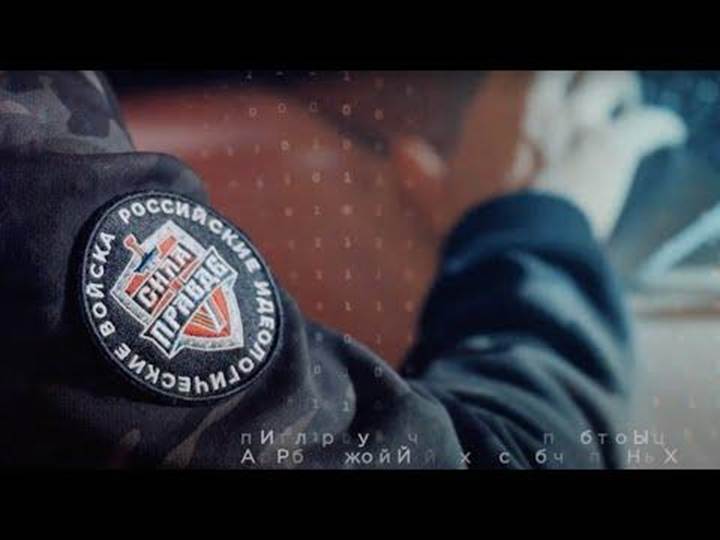
Promotional video of the Social Design Agency (SDA) disclosed by Thomas Rid. Sources: Foreign Affairs and YouTube
The SDA initially developed a strong campaign of disinformation, and continues to do so; however, the results have been far from anticipated. In his article, Rid (2024) even claims that “the SDA not only deceived its targets but also deceived itself”. Nevertheless, despite its poor performance, the firm continues to be funded by the Kremlin, without any government or media exposing this reality. Only by analysing SDA’s internal documents could Rid reach this conclusion. Media coverage of the Doppelgänger operation represents a significant advantage for disinformation actors, as it allows them to conceal their lack of effectiveness in influencing individuals. The SDA has therefore found a winning tactic by turning this exposure to its advantage: its employees tracked, collected, and translated every investigation published about them by the West in order to create their own publicity. In one of its internal documents, the company collated several press excerpts about itself, and boasted that “countries in the ‘collective West’ are seriously concerned by the effectiveness of the project” (Rid, 2024). Rid was also able to obtain a promotional video produced by the SDA, boasting that its campaign had been discovered by French intelligence, which the company used as an opportunity to explain how it operates and to promote the supposed quality of its disinformation services. At first glance, the targets of these distorted truths would appear to be Western populations. However, “disinformation operators’ main target audience has always been their funders and their own governments” (Rid, 2024). This means that the SDA creates its own propaganda based on the media coverage it receives, in order to appeal to its contractors. As a company, the economic interest underlying its work should therefore not be overlooked. Western states have a tendency to portray actors involved in the spread of disinformation as people wanting to destabilise and destroy democracies. Yet the main reason behind their activities is to meet an increasing demand for digital destabilisation tools in a rapidly expanding market. So, as Rid (2024) explains, “the SDA’s top goal was not to influence citizens in adversary countries, but to persuade Russian bureaucrats that the company was effective in order to get the next contract or renew a budget”.
As a result, the Russian government’s perception of its own power as well as its impact on the Western world has been skewed and shaped by the false impressions imposed by the narratives of these agents of disinformation. Indeed, the key argument of Rid’s investigation is to assert that “[t]hus is the bureaucratic logic of large-scale, long-term disinformation efforts: they tend to eventually persuade even the organizers that aspects of their falsehoods are true, and thus they become a form of institutionalized conspiracy theory” (Rid, 2024). The Russian government and administration, precisely as those who financed this massive disinformation campaign, are therefore social institutions that cannot escape the theory of “truth judgement”. Norbert Schwarz and Madeline Jalbert explain this concept in their chapter « When (fake) news feels true » in The Psychology of Fake News. If five components are present – compatibility of the claim, coherence, source credibility, social consensus, and evidence – individuals tend to more easily accept a claim as true, without in-depth reflection. Their intuitive assessment prevails and they accept the given information as fact because it aligns with their prior knowledge. Thanks to their thorough understanding and analysis of Doppelgänger’s coverage in Western outlets, the SDA and Struktura have all the tools and means of persuasion at their disposal to offer Russian bureaucrats and leaders narratives in line with their interpretation of the world. Indeed, all of the components are in place to persuade them effortlessly: the claim of Doppelgänger’s effectiveness appears credible because it has been widely covered in the West; the SDA and Struktura are trusted sources for the Kremlin; a social consensus has been established regarding the destabilising powers of disinformation; and the SDA has prepared tangible evidence in its reports intended for Russian bureaucrats. Economic actors are thus assured of renewing their contracts with the Russian government, which is trapped in a distorted worldview supposedly sympathetic to it. Russian authorities are, therefore, just as much as Western media and governments, victims of their own beliefs.
Bibliography
Beattie, A. (2023, 14th September). “The ‘Global South’ Is a Pernicious Term That Needs to Be Retired”, Financial Times. Accessed 16/11/2024. https://www.ft.com/content/7f2e0026-56be-4f3d-857c-2ae3a297daab
Belogolova, O., Foster, L., Rid, T. et Wilde, G. (2024, 3rd May). “Don’t Hype the Disinformation Threat”, Foreign Affairs. Accessed 10/11/2024. https://www.foreignaffairs.com/russian-federation/dont-hype-disinformation-threat
Couvelaire, L. (2024, 14th May). “A Paris, des mains rouges taguées sur le Mémorial de la Shoah”, Le Monde. Accessed 07/02/2025. https://www.lemonde.fr/societe/article/2024/05/14/a-paris-des-mains-rouges-taguees-sur-le-memorial-de-la-shoah_6233229_3224.html.
EU DisinfoLab. (2022, 27th September). Doppelganger: Media clones serving Russian propaganda. Accessed 24/02/2025. https://www.disinfo.eu/wp-content/uploads/2022/09/Doppelganger-1.pdf
EU DisinfoLab. (n.d.). What Is the Doppelganger Operation? List of Resources. Accessed 08/02/2025. https://www.disinfo.eu/doppelganger-operation/
Franceinfo. (2024, 21st February). “‘Doppelgänger’, articles détournés et fake news… Des dizaines de journaux ‘clonés’ dans une opération de désinformation menée par la Russie”. Accessed 24/02/2025. https://www.francetvinfo.fr/monde/europe/manifestations-en-ukraine/doppelganger-articles-detournes-et-fake-news-des-dizaines-de-journaux-clones-dans-une-operation-de-desinformation-menee-par-la-russie_6379297.html
Franceinfo. (2024, 19th September). “VRAI OU FAUX. Tweets, memes et caricatures. Comment une ferme à trolls russes a déstabilisé les élections en Europe, avec l’appui du Kremlin”. Accessed 10/11/2024. https://www.francetvinfo.fr/monde/russie/usine-a-trolls-soutien-a-l-extreme-droite-fake-news-sur-l-ukraine-la-strategie-d-une-agence-russe-pour-influencer-les-elections-europeennes-et-americaines_6786286.html
Kauffmann, S. (2023, 15th March). “C’est le deuxième front de la guerre russe : la déstabilisation, la désinformation et tout ce qui peut être instrumentalisé pour contrer l’influence de l’UE”, Le Monde. Accessed 10/11/2024. https://www.lemonde.fr/idees/article/2023/03/15/c-est-le-deuxieme-front-de-la-guerre-russe-la-destabilisation-la-desinformation-et-tout-ce-qui-peut-etre-instrumentalise-pour-contrer-l-influence-de-l-ue_6165562_3232.html
Laruelle, M. (2024, 20th April). “Dés-occidentaliser le monde : la doctrine Karaganov”, Le Grand Continent. Accessed 09/02/2025. https://legrandcontinent.eu/fr/2024/04/20/desoccidentaliser-la-majorite-mondiale-la-doctrine-karaganov/
Leloup, D. Reynaud, F. (2023, 14th June). “Révélations sur « Doppelgänger », la campagne de désinformation russe dénoncée par la France”, Le Monde. Accessed 08/02/2025. https://www.lemonde.fr/pixels/article/2023/06/13/revelations-sur-doppelganger-la-campagne-de-desinformation-russe-denoncee-par-la-france_6177446_4408996.html
Ministère de l’Europe et des Affaires étrangères. (2023, 13th July). Statement by Ms Catherine Colonna – Foreign Digital Interference – France’s Detection of an Information Manipulation Campaign. France Diplomacy. Accessed 08/02/2025. https://www.diplomatie.gouv.fr/en/french-foreign-policy/security-disarmament-and-non-proliferation/news/2023/article/statement-by-ms-catherine-colonna-foreign-digital-interference-france-s
Mohan, C. R. (2023, 9th December). “There Is No Such Thing as a Global South”, Foreign Policy. Accessed 08/02/2025.
https://foreignpolicy.com/2023/12/09/global-south-definition-meaning-countries-development/
POLITICO. (2024, 29th March). “Russian Influence Scandal Rocks EU”. Accessed 10/10/2024. https://www.politico.eu/article/voice-of-europe-russia-influence-scandal-election/
Rid, T. (2024, 30th September). Social Design Agency Internal Promotion Video [Vidéo]. YouTube. Accessed 09/02/2025. https://www.youtube.com/watch?v=UGF7-siZ9ac
Rid, T. (2024, 30th September). “The Lies Russia Tells Itself”, Foreign Affairs. Accessed 24/02/2025 https://www.foreignaffairs.com/russia/lies-russia-tells-itself
Schwarz, N. et Jalbert, M. (n.d.). “Chapter 5. When (Fake) News Feels True”. In Greifeneder, Rainer, et al., editors. The Psychology of Fake News : Accepting, Sharing, and Correcting Misinformation. Routledge, 2021.
United States Department of Justice. (2024, 4th September). Justice Department Disrupts Covert Russian Government-Sponsored Foreign Malign Influence Operation Targeting Audiences in the United States and Elsewhere. Accessed 10/11/2024. https://www.justice.gov/opa/pr/justice-department-disrupts-covert-russian-government-sponsored-foreign-malign-influence
Photo credits: L’Express. Credits: Getty Images
- « Action particulière ou continue qui consiste, en usant de tous moyens, à induire un adversaire en erreur ou à favoriser chez lui la subversion dans le dessein de l’affaiblir ; résultat de cette action. »
Dictionnaire de l’Académie Française. (n. d.). Désinformation. In Dictionnaire de l’Académie Française (9ᵉ édition). Académie Française. https://www.dictionnaire-academie.fr/article/A9D1911 ↩︎ - VIGINUM (Service de vigilance et protection contre les ingérences numériques étrangères; French governmental service for vigilance and protection against foreign digital interference) ↩︎
- Expression originating in the English term « Global South, » used for the first time by Carl Oglesby in 1969 in an article published in Commonweal Magazine.
Gaulme, F. (2022, 26th October). Le « Sud global », cet ensemble hétérogène de pays non alignés. Le Monde. https://www.lemonde.fr/idees/article/2022/10/26/le-sud-global-cet-ensemble-heterogene-de-pays-non-alignes_6147333_3232.html ↩︎ - The action of clicking or interacting with an element or a command on a webpage ↩︎
- EU DisinfoLab (2024, 30th October) ↩︎

ClasseInternationale
Sur un sujet similaire

 Accueil | Afrique | Géographie | Monde | Politique
Guerre au Soudan : la plus grande crise humanitaire mondiale pourtant invisibilisée internationalement

Commandez la revue 2026

Votre podcast

No Comment