
Classe Internationale

Votre revue d'analyse internationale

Catégorie : English

“Blood diamonds”: A symbol of the connection between conflict and natural resources in Africa

“Blood diamonds”: A symbol of the connection between conflict and natural resources in Africa

Buried within the African landmass are the world’s main diamond reserves. While they are vital to some African economies, diamonds have quickly become a major source of contention in power struggles. A causal link has therefore been established between mineral reserves and the civil wars that have affected several African countries such as Angola (1975-2002), Sierra Leone (1991-2002), and the Democratic Republic of the Congo (1996-2003).

Lire
Doppelgänger: The Two Faces of Russian Disinformation

Doppelgänger: The Two Faces of Russian Disinformation

The Russian disinformation campaign “Doppelgänger” began in 2022 with the aim of destabilising Western nations through an ideological war waged by the Kremlin. The operation has been widely covered by the media, which has crucially shed light on Russian disinformation companies. However, this extensive media coverage masks the limited impact of the Doppelgänger operation on populations exposed to fake news on social media and the internet.

Lire
Post-genocide Rwanda: between modernisation, international influence, and authoritarian drift

Post-genocide Rwanda: between modernisation, international influence, and authoritarian drift

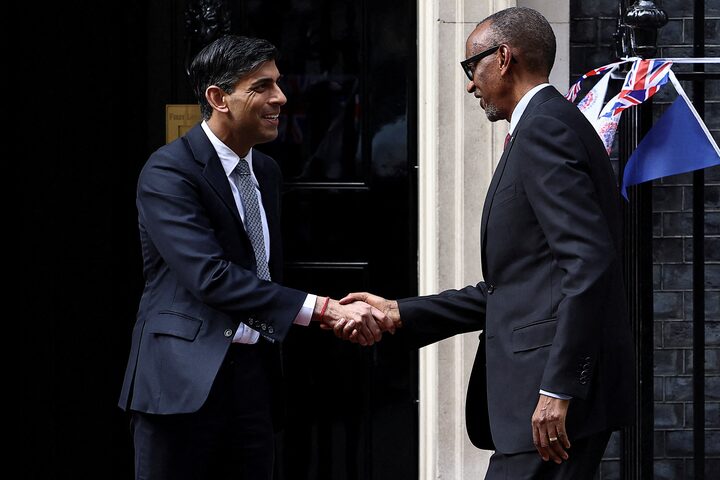
Long associated with the 1994 genocide, Rwanda has since thoroughly rebuilt and modernised itself under the presidency of Paul Kagame, and established itself as a key economic actor in Africa. Through a strategy of raising its international profile, illustrated by the hosting of the 2025 UCI Road World Championships, Rwanda seeks to redefine its image and strengthen its presence on the global stage. This article will explore the tools Paul Kagame has used to achieve this ambitious strategy.

Lire
The absence of formalisation in Japan-South Korea relations, a strategy for closer cooperation

The absence of formalisation in Japan-South Korea relations, a strategy for closer cooperation

Since the revival of bilateral diplomacy in 2022, cooperation between Japan and South Korea has significantly intensified, particularly in security matters, alongside the United States, in response to regional challenges posed by North Korea and China. In this perspective, this article aims at showing that the absence of formalisation in Japan-South Korea relations is in fact a strategy that enables closer cooperation without the constraints of an official alliance. Indeed, it allows both nations to bypass domestic obstacles, historical tensions and economic imperatives tied to China, while developing effective cooperation mechanisms, particularly within a trilateral framework with Washington.

Lire
Vietnam’s defence strategy in the Indo-pacific 

Vietnam’s defence strategy in the Indo-pacific 

At the heart of the Indo-Pacific, Vietnam has developed a defence strategy focused on safeguarding its sovereignty against complex security challenges and a growing regional competition. Tensions over maritime claims in the East Sea and China’s rising power ambitions drive Vietnam to strengthen its military capabilities by modernising its armed forces and building a strategic network of bilateral and multilateral partnerships. 

Lire
The sovereignty transfer of the Chagos Islands

The sovereignty transfer of the Chagos Islands

Decades after the end of British control, the Chagos Islands were officially returned to Mauritius. While this resolution, particularly its legal dimensions, is experienced as a significant victory for Mauritius, it remains insufficient for the Chagossian people. They continue to seek justice for the human rights violations they endured, including the forced displacement from Diego Garcia, the largest island to which they are still unable to return.

Lire
Post-Conflict UN Peacebuilding: the environment as a pathway towards a sustainable peace

Post-Conflict UN Peacebuilding: the environment as a pathway towards a sustainable peace

The environment can be seen as a major factor in conflicts, especially when it comes to the long-term effects of climate change. Indeed, it can be at the center of some major society inequalities and distensions, therefore influencing peace in many ways. Nonetheless, it can also be used to help create social cohesion, state capacity and legitimacy and therefore a more sustainable and fair society, acting on root causes of violence and helping prevent a relapse into conflict. This paper will thus analyze both how conflicts can be created by the environment and how it can be used to create state and social cohesion in some innovative ways.

Lire
The EU’s ambivalent attitudes on Algeria’s shale gas extraction

The EU’s ambivalent attitudes on Algeria’s shale gas extraction

The exploitation of shale gas, particularly through hydraulic fracturing, has sparked significant debate due to its environmental and social impacts. This paper examines the EU’s ambivalent stance on shale gas extraction, focusing on the case of Algeria, a country rich in shale gas reserves. Despite the EU’s internal policies that discourage fracking due to its environmental risks, some member states support shale gas extraction abroad, notably in Algeria. Since 2013, Algeria has become a focal point of conflict over shale gas, experiencing both local and national protests against fracking. These protests highlight the environmental and social ramifications of shale gas exploitation, such as water contamination, air pollution, and social inequality.

Lire
Hollywood, the epitome of the United States’ global power

Hollywood, the epitome of the United States’ global power

Hollywood is a film industry that has been making more than 500 movies per year for many decades. These movies are consistently among the top ten of the international box office. Such a success allows Hollywood to be in a leading position on the international film market. However, how come Hollywood thrives and displays so much cinematographic power? By broadcasting American values and geopolitical stances worldwide, Hollywood is no doubt a tool for the United States’ soft power.

Lire
Hosting embassies at Louis XIV’s & Qianlong’s courts: two rulers, one guest ritual?

Hosting embassies at Louis XIV’s & Qianlong’s courts: two rulers, one guest ritual?

Although Louis XIV is more commonly associated with the Kangxi emperor, when it comes to guest ritual, the analogy with his grandson the Qianlong emperor appears quite relevant. Not only did the two rulers share a common conception of the guest ritual, in particular for embassies from afar, they also lent it a similar meaning and political function in the construction of their royal authority. Centered around diplomatic protocol, this quiet battle between two sovereigns during diplomatic visits sheds a light on the underlying conflictuality which underpins the meeting of two civilizations.

Lire

Commandez la revue 2026

Votre podcast

Newsletter

Archives

Nous soutenir

Pour soutenir Classe Internationale, une revue engagée pour un travail d’analyse et de recherche de qualité dans les Relations Internationales : Faire un don